
mac performance guidemac performance guide

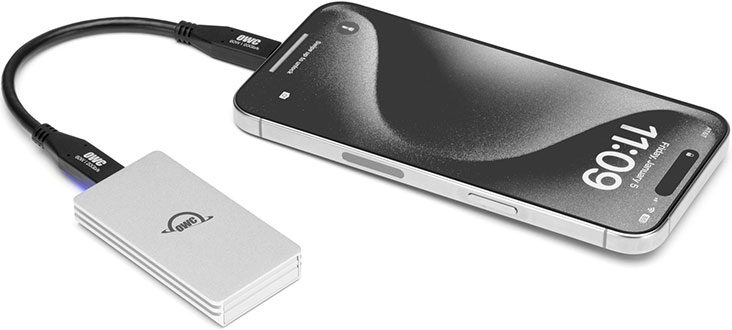
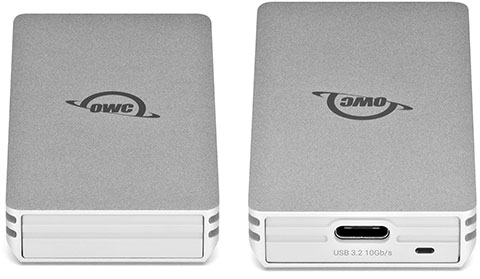
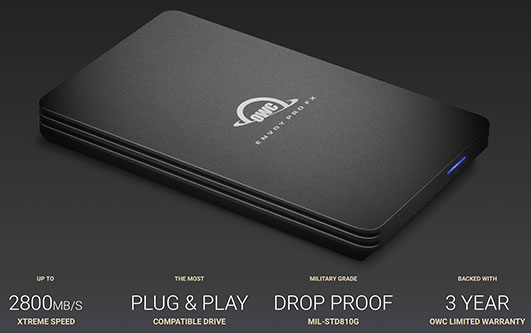
Up to 2.0TB of Portable, High-Performance, Bus-Powered Capacity
Extreme reliability and performance. Delivered.
Our premium upgrade service provides peace of mind.
MPG Photo Workstation MPG Pro Laptop

100% Kona, 100% Family Owned
WindInMyFace.com — Bicycling blog, gear, rides, training, nutrition

Are you a photographer?

Don’t miss all the great articles, news and analysis at

diglloyd.com
diglloyd.com

Thoughts on new Apple MacBook Pro

The unofficial details of the new MacBook Pro lineup are all over the web, a controlled leak apparently. There are good details at 9to5mac.com, but these are not official details, and some details might be erroneous. See also the Bloomberg article.

New models will reportedly be announced at Apple’s WWDC on June 11.

Curiously absent is any mention of a new Mac Pro desktop. My April 8th predictions still stand. Clearly the Mac Pro is of little significance to Apple.

Faster CPUs

The new “Ivy Bridge” CPU and chipset will be used. This is apparently a significant performance win, but the actual gains remain to be seen with real applications that need computing horsepower, e.g. Adobe Photoshop CS6 and Adobe Lightroom 4. Especially if the new models have constraints on maximum memory, as does the sluggish MacBook Air (less than 4GB usable memory).

Memory

It’s unclear how much memory will be supported in the new models. Apple could always cripple the new MacBook Pros at 8GB soldered on, though I seriously doubt that. But that is the case with the current MacBook Air models, which are limited to less than 4GB of usable memory.

“Pro”

In general, I would advise caution on the new MacBook Pro models for working professsionals that need specific hardware features. The new models might or might not serve as well as the existing models for some users, e.g. the possible elimination of Firewire 800 and gigabit ethernet, the elimination of the ability to install a 2nd internal SSD or hard drive, a memory limit of 8GB (doubtful, but possible).

Such features are not necessarily important to the majority of users, but could be quite important for some usage scenarios.

In short, the new models might no longer be “Pro”, and it might take time for suitable alternative peripherals to take up the slack, presumably using the USB3 and Thunderbolt ports.

No optical drive

Users wishing to burn backups, etc will have to carry an external optical drive.

At least with the current MacBook Pro model, one could remove the optical drive in order to add a 2nd SSD or hard drive as a compensatory gain in functionality, but it seems unlikely that the new design will allow for more than one internal drive.

Retina Display

The new MacBook Pro laptop models allegedly will have 11.6-inch and 13.3-inch screens, which leaves the question of what happens to the 15" and 17" models (presumably a 15" model will follow, but the 17" is less clear). Or maybe we’ll see only a 15" model, since ther MacBook Air already covers the ~13" area.

If the display is the high-res wide “retina” display, reading even 12-point text could be a serious problem for older users, at least without reading glasses (Apple has never properly dealt with the screen resolution vs point size issue). I already find text problematic on any model of the iPad unless I zoom in on many pages (I am in my late 40's, presbyopia is coming on strong).

Presumably, Apple would use pixel doubling for text in a retina display on the MacBook Pro, but there might be user interface elements with text (e.g. pixel graphics) thta will simply shrink, and thus be problematically small.

Display quality

Let us not assume that “brilliant color” has anything to do with accurate color, or a wide color gamut, or anything suitable for serious professional use. No doubt the screen clarity will be lovely (though probably mirror-like), but that won’t necessarily make them good choices for photographers. Wait and see. And of course the vast majority of the market will be thrilled with a high-res screen. And maybe even me, if size issues don’t crop up, since images should look great.

USB3, but no gigabit ethernet port

First, USB3 is not “super fast”. Unless you’re comparing it to the dog-slow USB2. Still, it’s fast enough to enable many useful peripherals, such as card readers for digital camera cards and external drives that run at decent speeds.

If the rumored USB 3 port is true, then a USB3-to-ethernet adapter might provide adequate networking performance. But it’s not going to be anywhere near as fast as a gigabit ethernet port. Acceptable perhaps, but far, far from ideal.

While gigabit ethernet is something of little importance to many users, I actually use the gigabit ethernet port regularly for file transfers, and its speed is especially important when transferring many gigabytes of files, or tens of thousands of small files. What might take an hour over Airport wireless takes 5 minutes over ethernet.

Lack of a fast network port would cripple the MBP for that scenario; the existing USB-to-ethernet adapter on the MacBook Air is a joke in terms of performance. The existing MBP has a a real gigabit ethernet port.

Apple iDevices Destroy Image Quality

Read about how Apple’s iPad or iPhone destroy image quality. Yes, including the new iPad with its fancy Retina Display. It’s iOS, so it affects all iDevices.

Example

Mouse-over or toggle the image below to see the version as displayed on the computer compared to the version displayed on the iPad.

The New iPad with its fancy Retina Display has obliterated the image quality (image shown is a portion of an actual screen shot).

diglloyd image
Toggle between computer display and what the iPad shows

Loathing for Microsoft — Product Key

All I did was to clone my boot drive, then reboot with a different boot drive, as I have done many times before. Apparently that has been eating up licenses.

I have not changed my computer otherwise.

I am a legal customer. I paid for the sofware. When I call the Activation number, it is a computer with no option to talk to a human.

In the meantime, I cannot get the work done I wanted to get done. I have paid for the software, I want and need to use it, yet I am deprived of its use with the only recourse having to spend 20 minutes on the phone every time it happens. There is no Deactivate that I know (as with Adobe), and the Activate by Phone thing requires the same codes, with no human at the other end.

The screen shot below shows how awful it is. No phone contact info, no human support. When you go here, Office 2011 is not even listed. This page is better, but still offers no solution, no phone number for a human that I can find.

Email “not available”, “Chat now” not available, Call Us not listed and anyway that is a computer!!!

After 15 minutes of searching the Microsoft site and 10 minutes on hold, I finally got through to someone over in Microsoft India, over a garbled line.

The representative adamantly refused to do anything about the license count. I got one activation for my trouble, which means I’m screwed the next time I switch boot drives. Even more infuriating, there is no process for talking to anyone in authority (I asked). The representative said she filed a “complaint” for me, but whether anyone at Microsoft can or will do anything, I don’t know.

Time to move away from Office 2011 for Mac.


Removing the Office 2011 license file

This doesn’t help if Office has already “eaten” many license on other drives long-since erased, etc.

Nor have I verified that it solves anything or how this will help with the evil Microsoft server database, which is where the number of licenses ultimately is tracked.

  • Open /Library (top level of your boot drive), and then open Preferences.
  • Drag com.microsoft.office.licensing.plist to the Trash

Here is how to remove Microsoft Office 2011 in its entirety.

Q: What’s Office?
A: It’s like Pages, and Hemorrhoids.

Alan F writes:

I sympathise about your experience with MS Office activation but I see no solution if you need any of the advanced MS Office capabilities because nothing else is fully compatible with it.

I have found that MS Office Mac sees the addition or removal of any eSATA external drive as a change of hardware that uses up one activation, or at least it does on my MacBook Pro, because eSATA drives are indistinguishable to MS programmers from internal drives. If I add the external drive I need to reactivate MS Office. If I remove that drive after reactivating MS Office then MS Office wants to be reactivated again. And so on. MS clearly have no intention of solving this issue because the problem is still with us after two service packs and yet it would be easy enough to do so just by ignoring drive changes and instead checking that the motherboard or cpu have not been changed, so that it must still be on the same computer no matter what has happened in terms of RAM, drives, etc.

USB 3.0 drives do not affect MS Office in this way but on my 17" MBP USB 3 is barely faster than FW800 and I prefer to have the bootability of FW800 drives to the minimal speed gains of USB 3. Thunderbolt should be OK too but I have not tested it; I'm waiting for a thunderbolt to Expresscard adapter that will take a newer and speedier USB 3 card. It seems that the MBP Expresscard port has been nobbled unnecessarily.

The closest that I have come to making eSATA drives not cause MS Office Mac 2011 to need reactivation is to do the following:
1. Close all MS Office applications.
2. Open Activity Monitor
3. Quit the following processes if they are running:
Microsoft Database Daemon
Microsoft AU Daemon
(in fact, anything that mentions Microsoft)
Nalpeirond6
4. Then I can I can add and remove eSATA drives as I need to but I must not start any MS application until the drive setup is back to normal.

The worst thing about MS Office needing reactivation is that in the meantime it will not let you see or do anything with any files that have already been created. It would be better if just refused to save new files rather than lock us out of all of our emails.

Years ago I created a few clever spreadsheets that I still use today, incorporating visual basic functions. That was with MS Office XP (2002). None of the "compatible" applications could use those spreadsheets including MS Office 2007, 2008 and 2010. At least 2011 works for me but I'm tied to it. Poor me.

DIGLLOYD: the Microsoft anti-piracy feature is really a reverse-piracy feature: it steals legitimate usage from legitimate users.

Niklas S writes:

That happened to me too. Very annoying! First I had to fill in the Key over and over again during some weeks. Of course suddenly I had used the key way too often, had to call Microsoft and got an Indian support guy. The sound quality of the call was very bad and his English wasn't so good as well.

Got a new Product ID and luckly it worked… for 2 month.

After that everything started again and I got the german support on the phone. The guy gave a new Product ID, again…, and told me to call directly again when I have to fill in the Key again because he can only see in his machine that my Office is deactivated and not that I had to enter my key over and over again.

I really hope that it is not happening again, because I need Office to write my thesis in July…

Anonymous writes:

This is what forces honest user to just go and get a pirated volume licence copy.
I have products where i paid for a full retail licence and then had to download a crack or other pirate copy just to be able to continue using the product as I cycle between different boot drives.

DIGLLOYD: I’m not going “there”, but I can’t blame anyone for doing so.

Eric S writes:

It looks like you have already received a lot of feedback from your post, but I have some slightly additional info that may be of some help.

The same exact thing happened to me and this is the course of action I took:

Friday, December 30, 2011
Called Microsoft Customer Support because Microsoft Office for Mac 2011 will not open.
The woman on the phone had me enter in a special code to get it to work.

Saturday, January 7, 2012
Called Microsoft Customer Support again because Microsoft Office for Mac 2011 will not open.
I could not figure out how to talk to a real person this time, so I just gave up. How did I get through before?...must have been a fluke.

Monday, January 16, 2012 6:33:20 PM
Called Microsoft Customer Support because Microsoft Office for Mac 2011 will not open for a third time and I really need to access my data.
It says "product has been activated too many times."
Figured out how to talk to a person at Microsoft Customer Support
Phone Number: (800) 936-5700
Alt Phone Number: (800) 642-7676
You must say "Representative" into the receiver to talk to a real person or the automated system will not help you.

Talked with Kayla in Tech Support. She says the problem is because I have an eSATA or a RAID hooked up to my computer. She is giving me a new product key, says to forget about the old key which is printed on the package.

Kayla says every three times I open Office, I am going to have to call and get a new product key as long as I have a RAID or eSATA hooked up to my computer. Says it is a known issue on this product and that is the only support solution they can offer at this time. Says next time, call this number (800) 936-5700 and I will be connected directly to tech support.

I nearly shit my pants when she told me this. The good news is that for some reason after I entered the new code she gave me, I have not had anymore activation problems at all. And I continue to use Excel daily.

DIGLLOYD: summarized as “you can’t make this stuff up”.

How a software company can be so offensively incompetent boggles the mind. But of course, this is Microsoft, the company that has screwed tens if not hundreds of millions of users with an unfriendly mess of a virus prone operating system for decades. Should anyone be surprised about the company that popularized “C:” and “D:”, etc for drive names?

Raka writes:

For my needs (basic ms office file usage) there was a solution that was neither Microsoft, nor piracy.

I use Open Office, no worries about frustrating product keys, and even better, it's free! http://www.openoffice.org

DIGLLOYD: Might be an option for some!

Mac OS X 10.7.4: Apple Mail Rainbow Beachball

With Mac OS X 10.7.4 installed, my Apple Mail now rainbow-beachballs frequently, chewing up an entire CPU for 20-30 seconds at a time when I click on a mailbox, entirely non-responsive. It’s awful— I depend heavily on email and now it’s unusable for any kind of search, or even clicking on a mailbox.

Apple Mail hang

Given the reported volume mounting problems, I’d suggest holding off on 10.7.4.

Issue with Mac OS X 10.7.4 and Volume Mounting?

Timothy Standing of SoftRAID writes:

We have started to see a number of users (so far 8) whose SoftRAID volumes are no longer mountable after they upgrade to 10.7.4.

Looking through the kernel.log file, there is an error being returned indicating that some call is not supported (the file system isn't supporting it). My estimate is that 2 - 5% of users with SoftRAID or AppleRAID volumes are going to encounter this bug.

There are two interesting points:

1). If the user moves the disks to another Mac running 10.7.4, they often mount and,

2) If they convert their SoftRAID volumes to AppleRAID ones, they often encounter the exact same error.

It might be good for you to advise your users to hold off updating to 10.7.4 until this issue has been resolved. There are also reports of PGP Disk volumes not mounting after upgrading to 10.7.4. I don't know if this is caused by the same bug or a different one.

MPG: I haven’t had issues so far with OS X 10.7.4, but every OS update carries some risks.

OWC Mercury Accelsior PCIe SSD 240GB vs 480GB + RAID

I’ve done an extensive update of my review of the OWC Mercury Accelsior PCIe SSD, which now includes Photoshop results from the 480GB model versus the 240GB model, as well as a triple RAID-0 stripe test and more.

Be sure to read the whole review to get the whole picture, including the Conclusions.

I hope to include results from the 960GB model by next week or so.

Clearly, Photoshop users working beyond available memory will want a pair of the OWC Mercury Accelsior 480GB cards.

OWC Mercury Accelsior
OWC Mercury Accelsior PCIe SSD card
(a compelling reason to favor a Mac Pro over an iMac!)
OWC Mercury Accelsior
OWC Mercury Accelsior PCIe SSD card
(a compelling reason to favor a Mac Pro over an iMac!)


OWC Accelsior PCIe SSD Reader Comment

Already tested was the 240GB Accelsior PCIe SSD.

I am testing the 480GB Accelsior now, and will be posting performance results soon.

Harry S writes:

After reading your article on the PCIe SSD card I bought the 240GB version.

Couldn't agree more that this is the best way to go; what a difference a simple $500 card makes.

Your contribution to 'the internet' with your MPG site, as well as photography is greatly appreciated by me. I can't really add anything to the response Ed F already gave, just thanking you for having created a total resentment to HDD's. Which does lead me to a question, and I fully understand if you don't reply; you already seem to be busier than a one-legged man in a kick fight with your websites and MPG Workstation business.

PS: I am also a fervent cyclist, combined with photography and computers, nee, Apple Macs, I see we share 3 interests. Do you come across more people with these 3 same interests?

DIGLLOYD: The Accelsior is a ground-breaking product offering a compelling reason to go with the Mac Pro instead of an iMac. By a vendor (OWC) that is “all in” on Macs in terms of quality and testing and support (OWC products are good for PCs also). Driver-free, few things are as gratifying as the Accelsior card.

As far as hard disk drives (HDD), they remain useful for high capacity storage. With the Accelsior, current jobs can be stored on the Accelsior, with perhaps a RAID-1 mirror of two 4TB drives for fault tolerant storage of the big stuff (just one of many possible configs). Migrating older material to the hard drives is one good way to benefit 100% of the time from the speed of the Accelsior.

Triple interests: it seems that photographers and Macs and cycling go together fairly often, which was my hunch and one reason I launched WindInMyFace.com. I don’t know the percentages, but I suppose most readers are not avid cyclists, yet there are more than a few.

OWC Mercury Accelsior
OWC Mercury Accelsior PCIe SSD card
(a compelling reason to favor a Mac Pro over an iMac!)


Three Web Sites by Lloyd Chambers

I’m the worker bee behind three web sites, this one and two more—

Digital photography at diglloyd.com

See diglloyd.com for lenses, cameras, how-to, including my available-nowhere-else Making Sharp Images, my Guide to Zeiss Lenses, and my Advanced Photography reviews and how-to and Guide to Leica and Guide to Digital Infrared Photography. As well as all my free articles.

Click the image for my photography blog.

A favorite spot in Yosemite, currently covered with snow
A favorite canyon in Yosemite

TheWindInMyFace.com

Cycling, primarily road cycling with an emphasis on training and nutrition and top-end gear. See also my cycling blog.

High in the White Mountains with the Moots MootoX YBB 29er mountain bike
High in the White Mountains with the Moots MootoX YBB 29er mountain bike , about 20°F

OWC Mercury Accelsior 240GB / 480GB

A few days ago I wrote how much I was enjoying the Mercury Accelsior PCIe SSD card for the Mac Pro, and just how well the Accelsior performs.

I tested the 240GB model, but soon I expect to have the next largest capacity Accelsior for testing, the 480GB model, which reportedly is even a little faster, though in truth the 240GB model is already so fast that it is beyond the needs of most all programs.

Ed F writes:

The recent posting for the PCI Express SSD you did, had me on the phone ordering the 240GB from OWC immediately. Once the card came in this weekend, it was time for some MacPro reconfiguration and installation of the Mercury Accelsior into my last open PCI port.

The install went exactly as your blog screenshots illustrated. My next step was a fresh install of Snow Leopard and Photoshop CS6 (Beta) and my other essentials applications onto the card.

The performance of the MacPro (4,1) was immediate and recognizable. This upgrade is not a tweak, but a significant improvement especially for heavy Photoshop users. My compliments for bringing the technology to my attention and for providing your viewers the benefit of pixel skills, from both behind the camera and in the digital darkroom.

DIGLLOYD: wonderful to hear these results.

OWC Mercury Accelsior
OWC Mercury Accelsior PCIe SSD card
(a compelling reason to favor a Mac Pro over an iMac!)


The Adobe Tax — CS6 Rent vs Upgrade

Editor’s note: most taxes go into a black hole, but at least when one buys software or services, the buyer has a choice to buy or not buy, and something desirable is delivered. So “tax” is perhaps a bit of a pejorative here.

This guest editorial piece is courtesy of Martin Doudoroff, who has pondered the Adobe rent vs buy situation with CS6 (opinions expressed might or might not be the same as MPG).

Adobe is in the process of rolling out Creative Suite 6 (CS6), which comprises between 17 and 25 or so products licensed individually or in various packages. As in the past—and whether it deserves it or not—every app gets a version number bump, every app gets some marketable new features, and for this forward progress, Adobe seeks more money from its customers. There’s nothing wrong with that, in theory. Sales drive software development.

This year is different than past years because Adobe is also launching an outright subscription service called Creative Cloud. Now, as an alternative to purchasing licenses (upgrade or full) for either individual Adobe CS apps or for a bundle, you can instead opt for a monthly or yearly subscription that nets you access to everything CS-related plus a mishmash of additional Internet-based Adobe services. Adobe has provided a handy comparison chart of these options at http://www.adobe.com/products/creativesuite/buying-guide.html.

The key to this situation is really Creative Cloud, because that’s really where Adobe really wants everybody. A full annual Creative Cloud subscription is $600 per year per seat. (They market it as $49.99/month, although it’s really $75/month if you’re not pre-paying for the year.) For people who earn their bread with Adobe apps, $600/year may seem a no-brainer. Those people are Adobe’s favorite customers.

If you already own CS-related licenses, you’ll find that most of your Adobe upgrade options work out to something in the neighborhood of that $600 figure. Upgrades to Photoshop CS6 on its own start at $400. Upgrades to the “Master Collection” license (which is the closest bundle to the Creative Cloud subscription) start at $525, but will be $1050 for many. It doesn’t take remarkable powers of observation to see that Adobe has you targeted for $600/year or so to stay on board with their relentless drive into a better world. And again, for many folks, this is not actually a problem.
[MPG: Martin D means $400 for CS6 Extended, the upgrade price for regular Photoshop CS6 is $199 or from CS5 Extended to CS6 non-Extended it is also $199. Readers should refer to the Adobe web site to be sure of pricing].

Implied in all this, however, is that the individual apps are not all that important—for Adobe—on their own. For years, they’ve been happy to sell you a license for Photoshop for $700 on its own, or (for example) offer you a 45% discount if you’ll instead pay them $1300 for a bundle of three apps. (The CS6 upgrade for that package is $550. You see the pattern.)

Adobe’s pricing structure works out great for Adobe because they get to reallocate their design and programming resources as they see fit—disproportionately—across their entire range of products from year to year, while eschewing any particular commitment to any particular product. Alas, Adobe’s actual customers are not all alike and don’t all share Adobe’s priorities. For them, paying Adobe annually (or semi-annually) is no guarantee that Adobe will invest in the applications that are important to *them*.

A particularly gruesome example is Dreamweaver CS6. This tired old app is receiving its third or fourth bogus “update” in a row from Adobe, for which they would happily exact a $250 upgrade fee from Dreamweaver CS5 users! It appears that for CS6, Adobe has grafted on a few spotty self-serving features (integration with other pay services they offer like Business Catalyst and PhoneGap) without addressing any fundamentals of the app. Indeed, one of their “top new features” is that they’ve updated Live View to so it “uses the latest version of the WebKit rendering engine to provide the ultimate in HTML5 support”. Hilarious! It’s pretty clear they have no interest in updating Dreamweaver’s ancient and obsolete “Design view” or repairing all the broken features and ugliness of the core app. Indeed, all the changes they’ve implemented appear carefully restricted to peripheral aspects of the software that are probably themselves plugins. The fact is there’s nothing new in Dreamweaver CS6 anybody should be paying money for. Rather, Dreamweaver CS6 ought be a free upgrade to existing Dreamweaver licensers, accompanied by an apology.

[MPG note: This site is edited with DreamWeaver. DreamWeaver is rife with bugs, short on time-saving features, and some important features simply cannot be used because of outright malfunction 100% of the time. It is by far the most frustratingly buggy and flawed software MPG has ever used for real work. Over the years, none of these issues are ever addressed. Ever.]

To be fair, Adobe does have three new Web-related products in the works: Muse, Edge and Shadow. None of these are shipping yet. My suspicion is that Adobe sees these products obviating Dreamweaver down the road, but they’re not exactly Dreamweaver replacements and it’s not as if Adobe is really leading their Dreamweaver userbase into the future; rather, Adobe just wants their $600/month and they’re evidently counting on the work they did to some other CS apps to entice you go along for the ride.

So, what did they actually do for CS6? Illustrator has clearly seen the most significant work, including a long-overdue 64-bit rewrite. Photoshop got a laundry list of new features and some UI tweaks. Just about all the other CS6 action is—overwhelmingly—on the audio & video side. (I’ll leave it to you to investigate further if that sounds interesting.)

Make no mistake, Adobe has a lot of wonderful developers doing wonderful work, and the various CS6 apps unquestionably have a lot to offer at almost any price. At the same time—as has been the case throughout the history of the whole Creative Suite era—many users will discover that what they receive for their $600 (or so) will not be commensurate with the hype.

But do you dare disengage from Adobe’s CS cycle? Do you dare skip the Adobe tax and deliberately *fall behind*? In the past, Adobe has provided upgrade options for up to three versions back, providing many customers with the option of skipping a version or two. However, this last winter, Adobe announced they weren’t going to do that any more, meaning that you’d have to purchase a full CS6 license if you didn’t have at least a CS5 license (or CS5.5) or elect instead to subscribe to Creative Cloud. (You can still read the new policy announcement here: http://blogs.adobe.com/conversations/2011/11/adobe-creative-cloud-and-adobe-creative-suite-new-choices-for-customers.html?PID=2159997) A couple months later, Adobe reversed their decision due to the public outcry it produced, but there’s no question what they really want is their users on Creative Cloud and they want their $600/year.

Maybe the pressure is off, but perhaps this is still a good time to step back and ask whether Adobe is going where you want to go? The bitter truth is that many—particularly those in pre-press and publishing—have no choice because Adobe has acquired a monopoly in many areas that the Creative Suite covers. On the other hand, many of Adobe’s applications were showing their age *a decade ago*, and inexpensive alternatives do exist that will meet some peoples’ needs just as well. A few examples:

Me? I’m sure I’ll pony up one more time. Probably I’ll give the Creative Cloud subscription a shot. If so, I’ll do so with considerable ambivalence, but maybe even a degree of relief, for I will be escaping the treadmill of maintaining my foothold in Adobe software licenses. If nothing else, the subscription option is a relatively straightforward proposition: you pay your money, you access the tools, and when you don’t need that any longer, you walk away.

MPG: I have the same decision to make. All I really use is Photoshop and DreamWeaver. I have not yet analyzed the value of rent vs upgrade.

Martin D adds an update (May 8)

So, Adobe is dangling a big fat carrot in front of all the existing CS app licensees to try to get them to subscribe to Creative Cloud instead of buying licenses:

If you own a license for pretty much anything from CS3 onward, you can sign up for the first year of Creative Cloud for $30/month (as opposed to $50). So, a $360 commitment for twelve months, rising to $600/year for subsequent years. Unless they raise the rates, which they eventually will probably do.

(My alternative would be to update my CS5 Design Premium license to CS6 Design Premium for $750.)

Now, here's where it really gets weird. Adobe is being terribly vague about this, but here’s what they’re saying:

“Best of all, your affordable monthly membership keeps you up to date, with access to new features and upgrades as soon as they're released. Get the latest Creative Suite features between major updates, new tablet publishing features coming soon, and much more.”

What they’re claiming is that they are going to start releasing feature updates for their apps incrementally to Creative Cloud subscribers, but they're implying these feature updates will NOT be available to full license holders. Whether the full license holders will have to wait for the next major release or will receive less frequent periodic updates is unclear.

Lots of potential questions here. For example, does this mean that only Creative Cloud subscribers will receive ACR updates? If nothing else, it feels like Adobe is sewing doubt about their commitment to those who would license CS6 as opposed to subscribing to the Creative Cloud service.

MPG: Adobe wants the yearly revenue model for predictable earnings, even if they upgrade nothing at all (don’t be surprised if this happens, once they train their users). I would not be surprised to see the non-cloud option transition away entirely.

As far as access to updates, it would not be surprising to see Adobe “encourage” its users by making the non-cloud version less appetizing.

Second update (May 9)

Reader Andrew observes:

Martin Doudoroff is factually in error when he says:

“If you already own CS-related licenses, you’ll find that most of your upgrade options work out to something in the neighborhood of that $600 figure. Upgrades to Photoshop CS6 on its own start at $400.”

The accurate facts are:

* Upgrades to Photoshop CS6 are $199: http://www.adobe.com/products/photoshop/buying-guide-upgrades.html

* $199 is slightly less than one-third of $600

Perhaps Martin meant Photoshop CS6 Extended upgrades are $399. But that's not the version all photographers use, many of us get by just fine and dandy with standard Photoshop. The approx. $200 upgrade expense every 1 to 2 years actually has not changed for a very long time! (If I recall correctly it was $179 to upgrade from PS 4 to PS 5 in 1998, that was my first upgrade). So the baseline case for a Photoshop user is not nearly as dire as Mr. Doudoroff colors it to be.

Martin responds:

Andrew is absolutely correct that Photoshop CSx to Photoshop CS6 is $199 (and that most photographers probably do not benefit from any of the features of Photoshop Extended). My oversight. My perspective is colored by owning—and depending on—multiple CS app licenses. If you use only one (1) CS app, your upgrade cost will be as per below (as of this writing).

Any version of Photoshop CS3 or later to Photoshop CS6: $199
Any version of Photoshop CS3 or later to Photoshop CS6 Extended: $399
Illustrator CS3, CS4, or CS5: $249
InDesign CS5.5 to CS6: $125
InDesign CS3, CS4, or CS5: $249
Dreamweaver CS5.5: $125
Dreamweaver CS3, CS4, or CS5: $249
Fireworks CS3, CS4 or CS5: $149
Flash Professional CS5.5: $99
Flash Professional CS3, CS4, CS5: $199

If you use more than one CS app, then I believe the conundrum stands. While many fixate on numbers (the prices), I really have no complaint with Adobe’s pricing: I do not see anything “dire” about the prices per se. What troubles me is the disconnect between version numbers, pricing and value. That disconnect is, in some cases, dire indeed. Adobe has created an extremely complicated proposition for their customers. Creative Cloud is perhaps their most honest attempt yet to simplify that proposition.

OWC Mercury Accelsior and System Feel

There is something really striking about the responsiveness of the OWC Mercury Accelsior PCIe SSDcertain apps just appear instantly on screen, as if by magic, as if they had already been running. And I already had very fast SSDs in place for my system prior to the Accelsior. While a few apps take a second or two to launch, that is because they do enough computation so that it takes time to start them even if the disk were infinitely fast (CPU speed becomes the bottleneck, the ultimate and ideal result of a system fully optimized for disk I/O and memory).

Soon I will be spec'ing all the MPG Pro Workstation builds with the 120GB or 240GB Accelsior by default; a product this exciting doesn’t come along very often.

I’ve already put one Accelsior into “production” as my Scratch drive (I work with numerous TIF and Photoshop files up to 8GB saved size, each, many of them). With the release of the 960GB Accelsior, I’ll move to having my Master volume on it.

OWC Mercury Accelsior
OWC Mercury Accelsior PCIe SSD card
(a compelling reason to favor a Mac Pro over an iMac!)

Ed F writes:

The recent posting for the PCI Express SSD you did, had me on the phone ordering the 240GB from OWC immediately. Once the card came in this weekend, it was time for some MacPro reconfiguration and installation of the Mercury Accelsior into my last open PCI port. The install went exactly as your blog screenshots illustrated. My next step was a fresh install of Snow Leopard and Photoshop CS6 (Beta) and my other essentials applications onto the card. The performance of the MacPro (4,1) was immediate and recognizable. This upgrade is not a tweak, but a significant improvement especially for heavy Photoshop users. My compliments for bringing the technology to my attention and for providing your viewers the benefit of pixel skills, from both behind the camera and in the digital darkroom.
DIGLLOYD: wonderful to hear these results.

OWC’s new Mercury Accelsior PCIe SSD for Ultra-Fast Photoshop CS6

See my multi-page review of the OWC Mercury Accelsior PCIe SSD.

As well as my Photoshop CS6 scratch disk test with diglloydHuge.

Photoshop CS6 speed for the diglloydHuge benchmark

Memory Price Trends for MacBook Pro, iMac, Mac Pro, MacMini

16GB for MacBook Pro only $206! I just flushed out my 2nd MacBook Pro.

32GB for iMac only $400!

Updated:

Mac Pro memory and iMac memory and MacMini memory are also at historic lows.

Apple MacBook Pro memory price history for 16GB (2 X 8GB) 1333 MHz memory
Apple iMac memory price history for 32GB (4 X 8GB) 1333 MHz memory
Apple Mac Pro memory price history for 48GB (3 X 16GB) 1333 MHz memory

OWC Garage Sale, including 48GB Memory for Mac Pro for $575

OWC has a garage sale in progress. Great deals on a bunch of stuff. Supply limited.

One deal: the prior rev of the 16GB modules for Mac Pro— 48GB for $575.

OWC’s new Mercury Accelsior PCIe SSD for Ultra-Fast Photoshop CS6

See my multi-page review of the OWC Mercury Accelsior PCIe SSD.

As well as my Photoshop CS6 scratch disk test.

Photoshop CS6 speed for the diglloydMedium benchmark

OWC’s new Mercury Accelsior PCIe SSD for Blistering-fast Drive Performance

My inital multi-page review of the OWC Mercury Accelsior PCIe SSD is now published.

Looking for the blazingly-fast plug and play storage?

OWC Mercury Accelsior
OWC Mercury Accelsior PCIe SSD card
(a compelling reason to favor a Mac Pro over an iMac!)

The OWC Mercury Accelsior PCIe SSD provides performance in excess of what most any program can utilize. Even Photoshop has enough of its own bottlenecks that the speed of opening and saving huge files is limited by Photoshop internals, not the speed of the OWC Mercury Accelsior. In short, the Accelsior eliminates disk I/O as a consideration. Except perhaps in extreme circumstances, but for that, one could stripe two of them for over 1000MB/sec.

The Accelsior opens up some very robust and capacious options, and can be configured into the ultimate Mac Pro for photographers, the MPG Pro Workstation.

  • Bootable, no driver needed! You can start up your Mac from the Accelsior.
  • Optimize daily workflow — makes a superb drive for an Adobe Lightroom catalog, large Photoshop files, scratch disk, etc.
  • By utilizing the Accelsior to optimize daily workflow, all 4 of the Mac Pro drive bays remain available for high capacity hard drives (e.g., the 4TB Hitachi Deskstar) for up to 16TB of internal storage for images, video, etc.
  • System can have ample storage with no hard drives at all! Many users might find a single 960GB Accelsior enough storage for a long time.
  • Watch disk I/O speed issue all but disappear with everything you do; the computer can ran at full speed, all the time, because it doesn’t have to wait for a slow hard drive.
  • Install up to three Accelsior SSDS with up to 960GB each (~ 3TB of SSD!)
  • Accelsior cards can be striped for performance in excess of what any program can use.
  • Accelsior cards be be mirrored for fault tolerance.

My revised system

The advantages of the OWC Mercury Accelsior PCIe SSD are so compelling for my own photography work that I am in the process of migrating my own MPG Pro Workstation system to a new configuration using it, plunking down my own cash to do so.

My targeted configuration is one 960GB Accelsior for my Master working volume, and one 480GB Accelsior for my Scratch working space (huge PSD/PSB/TIF files for my photography). This will free up four (4) drive bays currently occupied by OWC Mercury Extreme SATA 6G SSDs for free use for other things, such as high capacity hard drives.

Sequential write/read speed with zeroes and incompressible random data

Which is the Fastest 2TB (or 1TB or 3TB) Hard Drive?

Looking for the fastest hard drive storage you can get?

Even if you need only 2TB of storage, get 4TB drives for consistent high speed.

See my new study of drive speed on 2TB drive partitions.

See also:

4TB Hitachi 7K4000 vs 5K4000
2TB volumes on 4TB, 3TB, 2TB drives

4TB Hitachi Deskstar 7K4000 Hard Drive in 3-way RAID-0 Stripe

Added to my review of the TB Hitachi Deskstar 7K4000 are the results with a 3-way RAID-0 stripe.

OWC loaned me four evaluation units of the Deskstar 7K4000 for testing, and has them in stock and ready to ship.

4TB Hitachi 7K4000 vs 5K4000

Tested: 4TB Hitachi Deskstar 7K4000 Hard Drive

Read my review of the TB Hitachi Deskstar 7K4000 — the fastest high-capacity hard drive I’ve tested. More RAID-0 results are coming in a few days.

OWC loaned me four evaluation units of the Deskstar 7K4000 for testing, and has them in stock and ready to ship.

4TB Hitachi 7K4000 vs 5K4000

New Mac Pro, Maybe Not For a While

See my March 19 commentary on what to consider with a Mac Pro system

Mac Pro schematic  
What will it be?

A few points on what might happen with a Mac Pro. An educated guess, only.

  • I don’t expect a new Mac Pro before August. It’s just not a priority for Apple.
  • It is best not to assume that a new model will be faster than the current model. We might see more CPU cores running at a slower clock speed for lower power consumption. Which means lower performance for Photoshop/Lightroom and many other programs.
  • There might be SATA III and a “faster” video card, and it won’t make any difference to the vasty majority of Photoshop/Lightroom users. Besides, the OWC PCIe card is a solution that exists today (imminent), for the current Mac Pro.
  • There is a significant risk of an unappealing design change (e.g., , a tangled mess of Thunderbolt cables connecting a heap of noisy external building-block boxes each with its own low-quality power supply, instead of one nice Mac Pro box with its ultra high quality power supply).

I hope to be proved wrong, but I am not optimistic.

My top pick for most users remains the 3.33 GHz 6-core Mac Pro (thank you for buying via my gear page), outfitted as an MPG Pro Workstation.

Where to Buy a Mac Pro, MacBook Pro, iMac?

Looking for an in-stock Mac Pro or other Mac at a great price?

How about a price substantially lower on AppleCare than Apple?

Check out B&H Photo. See my gear page for links to my recommended Mac systems and AppleCare.

See also my Where to Buy a Mac Pro page, Where to Buy a MacBook Pro, Where to Buy an iMac pages.

Need help deciding what is right for your needs, or how to backup reliably? I offer consulting.

Turn Off Java — Flashback Trojan Risk

MacRumors has an unsubstantiated report of infected Macs from the Flashback Trojan, another reason to refuse to run Adobe Flash, and validating Jobs’ brilliant decision to discontinue including it in Mac OS X a few years back, a decision that drew ugly denial-of-reality attacks from Adobe.

This latest security risk is not caused by Flash itself; the Flashback Trojan masquerades as a Flash Player installer.

Be sure to run Apple system software update, which closes the vulnerability. Apple failed to update Mac OS X Java when the vulnerability surfaced in February.

The fundamental problem is the constant security issues with Flash which thus require constant updates, lulling users into clicking any button having to do with “updating your flash player”. Flash is a pox on the internet.

Disable java

Few sites need Java. Disabling Java in the web browser has always been a good idea.

Do not confuse the confusingly named Java and Javascript. Many sites require Javascript to run properly.

See also Setting up Your Mac for Better Security.

Disable Java in your web browser (Safari preferenes shown above)
Disable Java in your web browser
(Safari preferenes shown above)

4TB Hitachi Deskstar 7K4000 Hard Drive for 16TB Inside a Mac Pro

My testing is in progress on the new 4TB Hitachi Deskstar 7K4000 . OWC has them in stock and ready to ship, and graciously agreed to send me four evaluation units for testing.

Using the four standard drive bays, one can now have 16TB of internal storage! This can be arranged in many different ways: one 16TB volume, 4 X 4TB volumes, 2 X 8TB volumes, etc.

The MPG Pro Workstation is typically configured with one 2-drive stripe for the Master volume (for performance), and one 2-drive mirror for Time Machine volume (for fault tolerance), based on the assumption that 4TB of capacity is plenty to cover the most recent work— full external backups should always be made in addition.

Capacity and performance

With the 7K4000 having a 4TB capacity, I expect that average speed across the first 3 TB will be notably higher than the 3TB Hitachi 7K3000, because larger hard drives are faster (on average). In short, if you need only 3TB of capacity, getting the 4TB capacity and simply ignoring the last 1TB is likely to net you real benefits.

I started by making a 4-way RAID-0 stripe using SoftRAID 4.

Making a 4-way RAID-0 stripe with SoftRAID 4

Quick test

My DiskTester fill-volume test takes a long time to run (fills the entire volume), so my report will be 24-48 hours off. Get DiskTester as part of diglloydTools. I always use the command line (Terminal) version, but a simple GUI is also included.

Sequential speed

My initial testing shows outstanding speed similar to the Hitachi 3TB 7K3000. Which is plenty, because with a 5-way stripe, that Mac Pro internal bus becomes the bottleneck.

disktester run-sequential --test-size 32G ht4

Allocating maximum size contiguous file on "ht4" (14.6TB)...
14.5TB (99.9% of volume size)
TEMP FILE: /Volumes/ht4/disktester-test/DiskTester-Temporary-Test-File

Using test size of 32GB, 4MB at a time at start (0%), within a 14.5TB test file.

Iteration 1: writing...589MB/sec, reading...564MB/sec
Iteration 2: writing...579MB/sec, reading...572MB/sec
Iteration 3: writing...592MB/sec, reading...571MB/sec
Iteration 4: writing...586MB/sec, reading...571MB/sec
Iteration 5: writing...590MB/sec, reading...572MB/sec

 Wednesday, April 4, 2012 4:18:32 PM Pacific Daylight Time, volume "ht4" (14.6TB)  

------------- Averages for "ht4" (32GB/4MB, 5 iterations) ------------
Iteration 	Write MB/sec	Read MB/sec
    1     	     589    	    564    
    2     	     579    	    572    
    3     	     592    	    571    
    4     	     586    	    571    
    5     	     590    	    572    
		
 Slowest  	     579    	    564    
 Fastest  	     592    	    572    
 Average  	     587    	    570    
  Median  	     589    	    571    
  Range   	    13.0    	    8.13   

Command "run-sequential" executed in 572.69 seconds on Wednesday, April 4, 2012 4:28:05 PM Pacific Daylight Time

          
Making a 4-way RAID-0 stripe with SoftRAID 4
A 4-way RAID-0 stripe with SoftRAID 4, visual display of volume structure

4TB Hitachi Deskstar 7K4000 Hard Drive

The new 4TB Hitachi Deskstar 7K4000 hard drive is out (not just announced, OWC has them in stock and ready to ship).

OWC has graciously agreed to send me four evaluation units, so that I can test them singly and with RAID-0 striping. I expect to see them next week for review.

See my previous review of the slower 4TB Hitachi 5K4000 'Coolspin' hard drive.

Unlike the 'Coolpsin', the Deskstar 7K4000 spins at 7200 rpm, has a 64MB cache, and is aimed at performance users.

4TB Hitachi Deskstar 7K4000 hard drive specifications
4TB Hitachi Deskstar 7K4000 Hard Drive specifications

OWC Mercury Accelsior PCIe SSD

Up to 960GB of storage* in a PCIe slot running at PCIe speeds (potentially faster than 6G SATA!).

That is, for Mac Pro users. One more reason to buy a Mac Pro.

This card is a problem-solver for Photoshop and Lightroom and video users looking for ~1TB of fast storage without using up any drive bays.

Exciting! I expect to have one of the first units for review very soon.

For 2009 and later Mac Pros with PCIe v2.0, the card is a 2-lane card supporting up to 1000MB/sec throughput. The 2008 and older Mac Pro models are 500MB/sec, though there might be a single slot in the 2008 model that does 1000MB/sec (not sure). Note that these speeds are bus speeds. The card is unlikely to perform at full bus speed.

* 1TB of flash memory (1024GB), but with 7% internal over-provisioning for reliability (good!), usable space as a volume on your desktop is 960GB.

OWC Mercury Accelsior PCIe SSD

WOW! OWC 480GB SSD for only $599

Just got this OWC email today:

Top rated SSD with exclusive Mac support and performance of up to 285MB/s sustained data rates! We’re moving all our 3G line up to the new ‘Electra’ line and this is a great ‘EOL’ deal on brand new, 480GB Extreme Pro 3G units complete with full 3 year Warranty!

While they last only $599.00:
http://eshop.macsales.com/item/OWC/SSDMX480/

Free shipping within the continental USA too!

Also, can see all of our SSDs for nearly any Mac from the past Decade+ starting from $59.00 here:
http://eshop.macsales.com/shop/SSD/OWC/

Got a laptop? Replace its hard drive with this 480GB SSD and you’ll love it.

Or stick one in a Mac Pro for a dedicated Photoshop Lightroom catalog drive. Etc.

I’m so tempted to get a few of these, especially for travel and external backup. Ah, the budget... and I already have 6 or 7 OWC SSDs.

Memory Price Trends for Mac Pro, iMac, MacBook Pro, MacMini

Looks like memory prices are now scraping along the bottom.

Updated:

Given that the cost of 16GB for the MacBook Pro is now 10% or less of the cost of a well-configured 15" or 17" MacBook Pro, it’s a no-brainer upgrade for any performance user.

Mac Pro memory and iMac memory and MacMini memory are also at historic lows.

Apple MacBook Pro memory price history for 16GB (2 X 8GB) 1333 MHz memory
Apple Mac Pro memory price history for 48GB (3 X 16GB) 1333 MHz memory

Memory Usage with Photoshop CS5

Today’s peak memory usage  
Today’s peak memory usage— 23GB

Today I was working on one of my photographic lens comparisons with three lenses, files from the 24-megapixel Nikon D3x.

Memory usage hit 23GB in Photoshop CS5. Now if that had been the new Nikon 36-megapixel D800, then it would have hit a whopping ~34 GB.

Which is why for my use, nothing less than 48GB of real memory will do. I use a 12-core 3.33 GHz Mac Pro with 64GB as 8 X 8GB memory from OWC. On a 4-core or 6-core Mac Pro, you can go to 48GB as 3 X 16GB.

See also my Optimizing Photoshop CS5.

You might be surprised by just how low prices have dropped on memory.

Check your memory usage to see if you have “Page outs”. If so, get more memory.


It’s About Time for a New Mac Pro

Seem my April 8 status update.

The question keeps arising whether to invest in a Mac Pro now, or whether to wait.

Mac Pro schematic  
What will it be?

Here we are in mid-March with new Intel chips on the near horizon (end of March or early April), and the rumor mill is as dry as winter in California this year. With some luck, that will change like the monsoon-like rains we had this past week.

Or maybe not. In 2010, Apple delayed a new Mac Pro until August. Might we see a repeat this year? I don’t want to contemplate the worse alternative (discontinued).

After all, Apple is selling so many iPads and iPhones, the Mac Pro is just a grain of sand in the iP* sandbox, so it makes absolutely no difference to profits, at least in the short term bean-counter sense.

My advice to professionals remains the same: if your current Mac (any flavor) is impeding your work (and your time is valuable), get a new Mac Pro soon, outfitted as an MPG Pro Workstation. It won’t hurt to wait another 2 weeks, but if no new model emerges soon, get on with getting work done.

As I wrote back in December, Apple shows a disregard for its professional users in the way it arbitrarily changes programs like Final Cut, and when it also provides no guidance as to whether a crucial product might continue. When there is credible speculation of the Mac Pro being discontinued, Apple’s silence speaks volumes. Professionals need to know they have a path forward, any vague guidance in the affirmative would address the issue.

Why a Mac Pro?

My recommended Mac Pro systems are found on my gear page.

Fast enough

The existing 3.33 GHz Mac Pro meets my needs, which are relatively demanding. Sure, a faster CPU would be nice, but would it actually improve my productivity in a significant way? No. One can also upgrade any 2010 Mac Pro to as much as a 12-core 3.46 GHz model.

In short, fast enough is fast enough, and beyond that, it’s nice, but not crucial.

On the other hand, if efficiency is suffering from an unreliable or slow system, moving to a Mac Pro system now (with appropriate drives and memory) is likely to save you more time even in the short run than the difference between a current Mac Pro and a new one. Fast enough is fast enough.

Upgrades

Your existing system might actually be fast enough, but it might be that the drives are slow, or your work demands more memory than is available. Investigate memory usage and pay attention to disk speed; it might be that a modest upgrade is enough to deliver satisfaction.

Especially with a laptop, a slow drive and/or a measly 4GB of memory can be like a wet blanket on a cold day, you can shiver and bear it, or fix the problem.

On the other hand, if all CPU cores are fully utilized, then only more or faster CPU cores are going to help. You can upgrade the CPU in 2010 Mac Pros. For those with a slow 4-core , moving to a faster 4-core CPU or 6-core CPU is a relatively good deal (upgrading from a single CPU to dual CPUs is much more expensive, due to the parts involved).

Fault tolerance

Another reason to get a Mac Pro are the options it offers for expansion, backup and fault-tolerance (via RAID mirroring for example). Or something as simple as the ability to swap a bad drive in a few minutes (crucial for “production” systems).

All those things with high performance too. If your work depends on uptime, then a system that puts you at risk from even a gray-swan failure is grounds for a high priority upgrade.

Buyer’s remorse

Skip the buyer's remorse.

Computers get a little better every 6 months. But until then, a system that meets your needs, even it lacks full sex appeal, has nonetheless given you the benefits for a significant period of time. That aspect is often overlooked; skip the buyer’s remorse and realize that “killer” breakthroughs in performance are rare, and that a balanced system (CPU, ample memory, fast drives, solid backup) is what matters.

Where to Buy a Mac Pro, MacBook Pro, iMac?

Looking for an in-stock Mac Pro or other Mac at a great price?

How about a price substantially lower on AppleCare than Apple?

Check out B&H Photo. See my gear page for links to my recommended Mac systems and AppleCare.

See also my Where to Buy a Mac Pro page, Where to Buy a MacBook Pro, Where to Buy an iMac pages.

Need help deciding what is right for your needs, or how to backup reliably? I offer consulting.


Outstanding 6G SSD Performance!

diglloyd Home Page | Terms of Use | Copyright © 2008-2010 diglloyd Inc, all rights reserved. | Contact | Newsletter + Alerts | Press